



How to Choose a Sofa Seat Depth: 7 Steps That Work
Quick Summary
Choose sofa seat depth by matching it to your height, how you sit, and your room size. Measure the seat from the cushion's front edge to the backrest, and remember that back cushions reduce the usable depth. Shallower seats suit upright sitting, while deeper seats suit lounging.
- Seat depth runs from the front edge of the cushion to the backrest, not the sofa's overall depth.
- Measure the seat yourself, since store listings often show overall depth instead.
- Shorter sitters often prefer shallower seats, while taller sitters usually need more depth.
- Back cushions reduce usable depth, so measure with the back cushion compressed.
- Leave at least 30 inches of walking clearance in front of the sofa.
Table of Contents
- How to Choose a Sofa Seat Depth: 7 Steps That Work
- What Sofa Seat Depth Means and Why It Matters
- How to Measure Sofa Seat Depth Correctly
- Standard Sofa Seat Depth in Inches
- Matching Seat Depth to Your Height and Lounging Style
- Deep vs. Shallow Sofa Comfort: What to Expect
- Choosing Seat Depth for Your Room Size and Layout
- Cushions, Back Pillows and Mobility Considerations
- Booking a Sofa Fit Check Before You Order
- Frequently Asked Questions
How to Choose a Sofa Seat Depth: 7 Steps That Work
Last Updated: November 23, 2026
What Sofa Seat Depth Means and Why It Matters
Sofa seat depth is the distance from the front edge of the seat cushion to the back of the seat, where it meets the backrest. Getting this number right decides whether a sofa feels comfortable for upright sitting, lounging, or both. Shoppers often focus on the sofa's overall size and forget about the seat itself.
Seat depth affects how your body rests. A seat that is too shallow leaves your thighs unsupported and your feet dangling. A seat that is too deep can make your back slide forward until you're perched on the edge.
Overall depth is different. It measures the full sofa from the front of the arms or base to the back of the frame. Two sofas with the same overall depth can have very different seat depths, because the arms, back cushions and frame all take up space.
- Seat depth: front edge of the cushion to the backrest
- Overall depth: full footprint of the sofa from front to back
- Cushion thickness: how much the seat cushion adds to the usable depth
How to Measure Sofa Seat Depth Correctly
Measuring the seat yourself is the most reliable way to avoid a bad fit. Store listings often list overall depth, so you need the seat number separately. Use these steps:
- Remove the back and loose cushions if you can.
- Measure from the front edge of the seat deck to the back of the frame, in a straight line.
- Measure the seat cushion's depth on its own, from front to back.
- Note the cushion thickness at the front edge.
- Compare your numbers to the seat depth listed for the sofa you want.
If the cushions are loose, measure them with the sofa's seat deck as the reference point. Write down each number so you can compare sofas side by side.
Standard Sofa Seat Depth in Inches
Seat depth varies widely by brand and style, so check the listing for the exact figure.
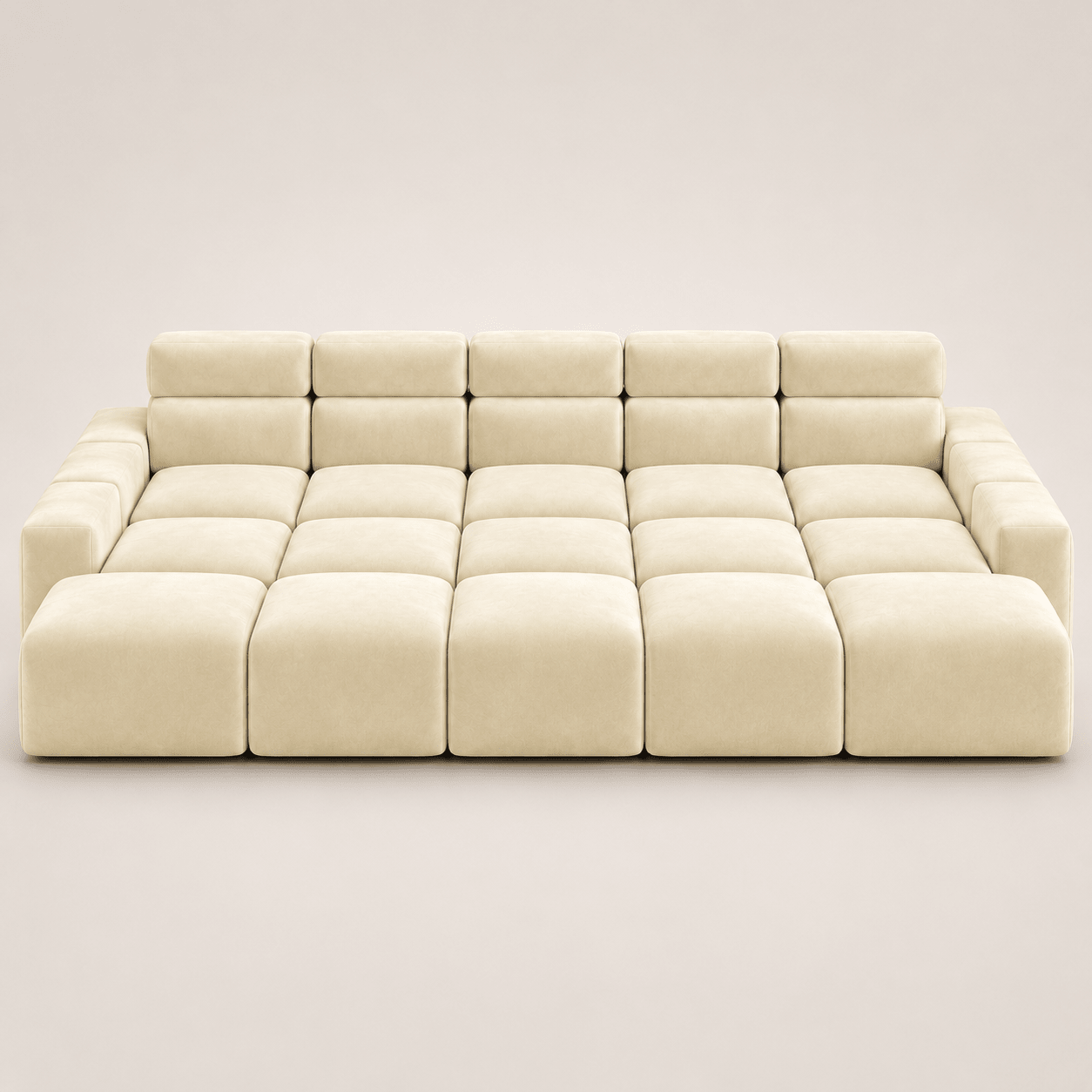
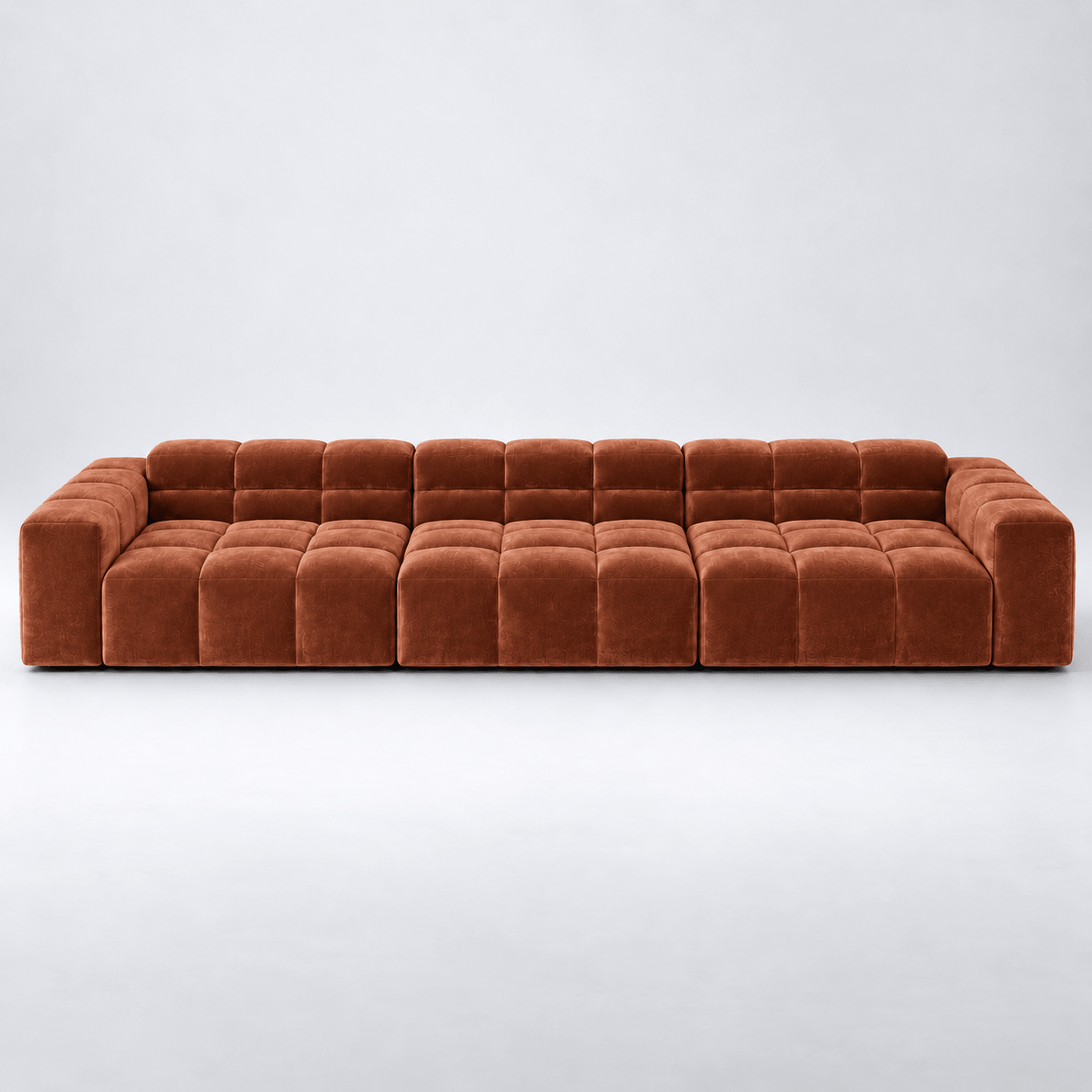
Seat depth varies by brand and style, so always check the listing. Many shoppers also compare overall depth, which is usually much larger. For reference, our Cove Solstice Extra-Deep Sofa has an overall depth of 52 inches and a seat height of 17 inches, and our Palm Reverie Three-Piece Sofa has an overall depth of 40 inches and the same 17-inch seat height.
Matching Seat Depth to Your Height and Lounging Style
Your height and how you sit are the main factors in choosing a seat depth. Shorter people often feel comfortable on a shallower seat, because their feet reach the floor more easily. Taller people usually need more depth so their thighs get proper support.
How you sit matters just as much:
- Upright sitting: a moderate depth keeps your back supported without pushing you forward.
- Lounging: a deeper seat lets you stretch out, with your back against the cushions and your legs up.
- Mixed use: a middle depth with firm back cushions works for most households.
Shallow vs. Deep Seats: Pros and Cons
| Seat Type | Pros | Cons | Best For |
|---|---|---|---|
| Shallow seat | Easy to get in and out of, keeps you upright, fits small rooms | Less thigh support, can feel cramped for lounging | Shorter sitters, formal rooms |
| Deep seat | Room to stretch, relaxed lounging, good thigh support | Can be hard to sit up straight, takes more floor space | Taller sitters, family rooms |
Shallow seats work well when you sit upright most of the time. Deep seats suit people who like to curl up. Neither is better in every case.
Deep vs. Shallow Sofa Comfort: What to Expect
A deep seat feels relaxed at first, but it can strain the lower back if you sit upright for long periods. A shallow seat feels supportive while you sit straight, but it can feel tight when you want to recline. The difference comes down to where your body weight lands.
On a deep seat, your hips slide forward until your lower back loses contact with the backrest. Your thighs take the load, and after 20 or 30 minutes you feel it in the lumbar area. On a shallow seat, your back stays supported, but your thighs hang off the front edge, which can cut circulation behind the knees. The fix in both cases is a cushion that fills the gap: a firm lumbar pillow on a deep sofa, or a slight recline and an ottoman on a shallow one.
Cushion density changes the feel too. A soft cushion on a deep seat can swallow your legs, while a firmer cushion keeps your body higher and shortens the effective depth. Cushion density also changes the feel of a seat, since firmer foam holds its shape while softer foam compresses.
Try a sofa in person if you can, and sit in it for several minutes before you decide. Test three postures: upright with your back against the cushion, reclined with your legs stretched out, and perched on the edge as you would when getting up. If your feet stay flat and your lower back stays in contact with the cushion in the first two, the depth is close to right. If you have to brace your hands to stand, the seat is too deep or too low.
Choosing Seat Depth for Your Room Size and Layout
Room size matters as much as your body. A deep sofa can overwhelm a small room and block walkways. A shallow sofa may look too small in a large living room with high ceilings.
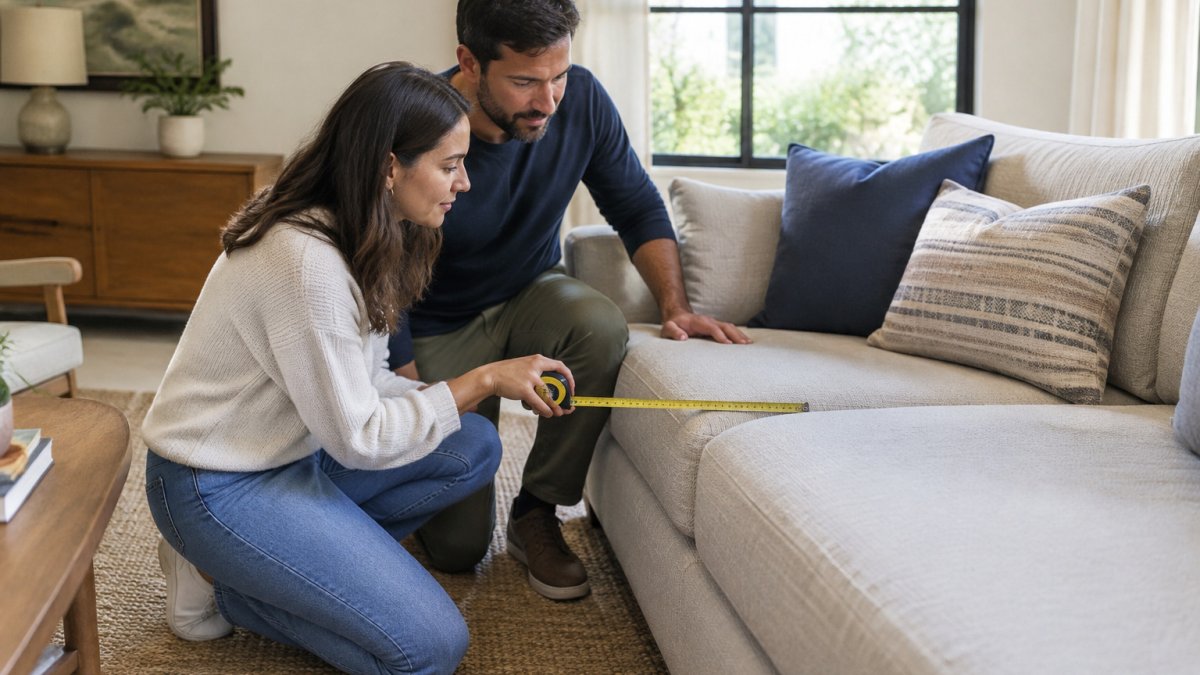
Start by measuring the space:
- Measure the wall where the sofa will sit.
- Leave at least 30 inches of walking clearance in front of the sofa.
- Check the room's doorways and hallways so the sofa can be moved in.
- Compare the sofa's overall depth to the distance from the wall to the coffee table area.
Our guide on How to Measure a Room for a Sectional Sofa walks through the room measurements in more detail. If you have a large living room, our guide on Which Sofa Is Best for a Large Living Room? shows which styles suit a spacious layout.
Cushions, Back Pillows and Mobility Considerations
Two things quietly change the usable seat depth of a sofa after you buy it: the back cushions and the people who sit in it. Most guides stop at the frame measurement, which is why so many shoppers end up with a sofa that measures right and still feels wrong.
The cushion-to-frame ratio
The seat depth printed on a spec sheet is usually measured to the back frame. Once you add back cushions, the usable depth shrinks. Back cushions reduce the usable depth of a sofa, so a thick, loose back cushion can make a seat feel noticeably shallower than its listed depth.
To get the real number, measure the seat deck to the back frame, then subtract the compressed thickness of the back cushion at hip height (press it down as you would when sitting). Compare that usable number, not the spec-sheet number, to your height and posture. If you prefer to sit upright, a usable depth of about 20 to 22 inches usually keeps your back against the cushion without pushing you forward. If you lounge, 23 to 26 inches of usable depth gives your legs room to stretch.
Throw pillows work the same way. Stacked back pillows can also reduce usable depth. If a sofa feels too deep, the cheapest fix is often to remove or thin the back pillows rather than replace the sofa. If it feels too shallow, a firm lumbar pillow can add support without stealing much depth.
Watch out: a soft back cushion compresses more than a firm one, so the same sofa can feel deep to a light sitter and shallow to a heavier one, test with the cushion you will actually live with, not a showroom prop.
Mobility and accessibility
Seat depth affects more than comfort; it decides how easily someone can stand up. For older adults or anyone with limited mobility, a deep, soft seat can trap the hips below the knees and make rising without help difficult. For older adults or anyone with limited mobility, seat height and depth matter for getting up easily, so it is worth testing the seat before buying. Firm seat cushions and a shallow-to-moderate depth make a bigger difference than armrests alone.
If the sofa serves a household with mixed needs, look for a model with removable back cushions so the usable depth can be shortened for the person who needs it and restored for everyone else.
For comfort and durability, consider the cushion filling. Which Sofa Cushion Filling Is Most Comfortable? compares the common options, and How to Choose Durable Sofa Cushions That Last explains what to look for in long-lasting cushions.
Booking a Sofa Fit Check Before You Order
Measuring at home is a strong start, but a fit check helps you confirm the numbers in your actual room. Bring the measurements for the seat depth, the overall depth and the cushion thickness, and sit in the sofa if you can.
Once you have your measurements, compare the seat depth to your height and lounging habits. If the numbers fit your room and your body, you are ready to shop with confidence.
Frequently Asked Questions
What is the most comfortable seat depth for a sofa?
Lounging comfort depends on how much cushion you sit on: deeper seats suit people who like to sit back with their legs stretched out, while shorter adults often prefer a shallower seat. Measure from the front of the seat to the back cushion at the point where you normally sit to confirm the fit.
What is the standard seat depth for a sofa?
Sofa seat depth varies by brand and style, so check the listing for the measurement, which is taken from the front edge of the seat cushion to the back of the seat base. Because the back and throw pillows add to how deep the sofa feels, compare the seat depth figure with the overall depth listed in the product dimensions before you decide.
Should I choose a deep or shallow sofa for a small living room?
A shallower seat depth usually works better in a small living room because it keeps the overall footprint compact and leaves more floor space for walking paths. Deep seats offer more lounging comfort but can make a small room feel crowded. If you prefer a deep seat, consider a sofa with a slimmer arm profile or a lower back to reduce visual bulk while keeping the seat comfortable.
How do I measure my ideal sofa seat depth?
Sit in a chair of your preferred height and note where your back sits relative to the wall or armrest, then measure how far your knees extend and how far your back reaches. A good starting point is to check how far your hips rest from the back of the seat when you sit upright, then add the cushion thickness you want. Use these measurements to compare against the seat depth listed for the sofa you want.


