



Which Sofa Cushion Filling Is Most Comfortable?
Quick Summary
The most comfortable cushion filling depends on how you sit. High-density foam gives firm, lasting support for upright sitting, while fiber or down gives a softer, sink-in feel. Foam wrapped in fiber or batting is often the best balance for everyday cushion filling.
- Choose high-density foam for firm support and the best shape retention over time.
- Fiber and polyester filling feel soft but need regular fluffing to avoid flattening.
- Down and feather filling is plush but needs frequent fluffing and can trigger allergies.
- Foam wrapped in fiber, batting, or feathers combines a supportive core with a softer surface.
- Ask for the density number and check whether the core is a single piece or several layers.
Table of Contents
- How Sofa Cushion Filling Shapes Comfort and Support
- Foam Filling: Density, Firmness, and Durability
- Fiber and Polyester Filling: Soft Feel With Less Support
- Down and Feather Filling: Plush Comfort and Upkeep
- Hybrid and Foam-Wrapped Cushions Compared
- Best Filling for Sofa Back Cushions
- Best Sofa Filling to Keep Shape Over Time
- Choosing Your Cushion Filling and Replacing Inserts
- Frequently Asked Questions
How Sofa Cushion Filling Shapes Comfort and Support
Last Updated: November 14, 2026
The filling inside your sofa cushions decides how the seat feels on day one and how it looks after three years of use. Foam gives firm support, fiber gives a soft, sinking feel, and down gives a plush, lived-in look. Most people get the best result by matching the filling to how they actually sit.
At Tom Collins Home, we build our sofas around this trade-off. The right filling depends on whether you want to sit upright, lounge, or host guests on the couch every weekend. Below, we compare the main options, show where each one falls short, and explain how to pick the one that fits your household.
Quick Picks:
- Best for firm support: High-density foam seat cushions
- Best for a soft, sink-in feel: Fiber or down-blend cushions
- Best for back cushions: A foam core wrapped in fiber or batting
- Best for long-term shape: Foam with a firm density rating
Foam Filling: Density, Firmness, and Durability
Foam is the most common filling in seat cushions, and it is the best place to start, but only if you separate the two numbers shoppers usually confuse. Density and firmness measure different things, and a cushion can be high in one and low in the other.
Density is how much foam material is packed into a given volume, usually expressed in pounds per cubic foot (lb/ft³). It is the best predictor of durability: higher-density foam resists sagging and compression over years of use, while lower-density foam breaks down faster. Firmness (often called IFD or compression) is how hard the foam feels when you press it. It is a feel measure, not a lifespan measure.
A practical way to read the two together:
- Low density, soft firmness: Feels plush in the showroom but bottoms out and sags soonest. Common in budget seat cushions.
- High density, soft firmness: Rare and expensive, soft to the touch but still holds shape. Often achieved with a softer top layer over a firmer core rather than a single block.
- High density, firm firmness: The most durable everyday choice. Holds a level seat for years and suits people who sit upright or work from the sofa.
- Low density, firm firmness: Feels supportive at first but loses that support quickly under daily weight.
Ask about density before you buy, and ask for the number rather than a word like "premium." A firm, high-density foam core helps keep the seat level over time.
Watch out: a soft top layer over a thin, low-density core will feel comfortable in the showroom but bottom out within a year or two, the wrap hides the core, so press firmly and ask what is underneath.
Fiber and Polyester Filling: Soft Feel With Less Support
Fiber, often polyester fiberfill, gives a soft, pillowy feel that many shoppers like. It does not push back as firmly as foam, so it suits people who want to sink in rather than sit upright.
The trade-off is support and shape. Fiber can flatten and clump with daily use, so it needs regular fluffing. For a relaxed sitting room where comfort matters more than a crisp silhouette, fiber works well. For a family sofa that gets heavy use, pair it with a firmer core.
Down and Feather Filling: Plush Comfort and Upkeep
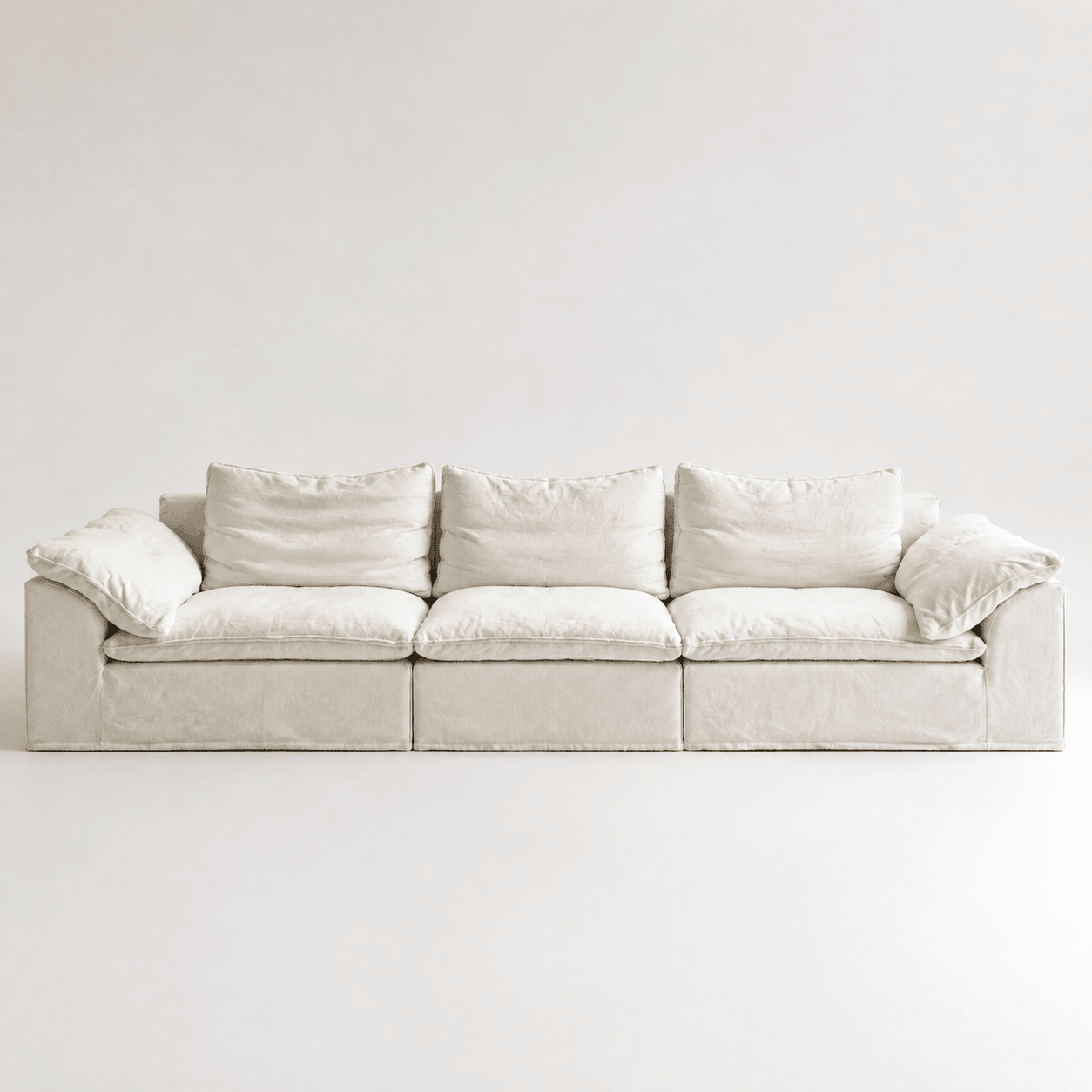
Down and feather filling feels luxurious. It molds to the body, and the cushions look full and inviting straight out of the box. The Bellini Sofa features loose, goose-down-filled cushions that pile generously along the back and seat, giving it a relaxed, lived-in look.
Down needs more upkeep than foam. You will need to fluff cushions often to keep them from going flat, and down can be a problem for anyone with feather allergies. Expect the plush feel to fade if the cushions are not maintained.
Pros and cons at a glance:
- Pros: Plush, molds to the body, luxurious look
- Cons: Needs frequent fluffing, can trigger allergies, costs more to maintain
Hybrid and Foam-Wrapped Cushions Compared
Hybrid cushions combine a firm core with a softer outer layer. A foam core wrapped in fiber, batting, or feathers gives you support underneath and a softer surface on top. This is often the best balance for everyday seating because the core carries your body weight while the wrap controls how the seat feels in the first inch, the part you actually touch.
The wrap matters as much as the core. A thin fiber wrap gives a crisp, tailored look and a slight cushiony surface; a thicker batting or feather wrap gives a plusher, more relaxed feel but needs more fluffing. The core still determines durability, so a hybrid is only as good as the foam inside it.
How the common hybrids compare:
- Foam core + fiber wrap: The most common everyday build. Supportive, moderate upkeep, holds shape well.
- Foam core + feather or down wrap: Plush and inviting, but the wrap compacts and needs regular fluffing; not ideal for feather allergies.
- Foam core + memory foam layer: Conforms to the body and reduces pressure points, but can feel warm and slow to spring back.
- Layered foam (firm base, softer top): A single insert with two foam densities. Holds shape like firm foam but feels softer on contact.
Hybrids cost a little more to build, but they tend to hold up better than all-fiber cushions.
When you shop, ask three questions: what is the core density, what is the wrap material and thickness, and is the core a single piece or several layers? Single-piece cores and layered foam both hold shape better than a loose fill stuffed around a small core. Press the cushion firmly with your palm, a good hybrid springs back quickly at the surface while still feeling solid underneath.
| Filling Type | Support | Softness | Shape Retention | Upkeep |
|---|---|---|---|---|
| High-density foam | High | Firm | High | Low |
| Fiber / polyester | Low | High | Low to medium | High |
| Down / feather | Low to medium | Very high | Medium | High |
| Foam wrapped in fiber or down | High | Medium to high | High | Medium |
Watch out: a hybrid with a low-density core and a thick feather wrap can feel luxurious on day one and still flatten within a couple of years, the wrap masks the core, so confirm the density before you commit.
Best Filling for Sofa Back Cushions
Back cushions have a different job than seat cushions. They need to support your lower back and hold their shape against the frame, but they do not carry body weight the same way the seat does.
For most people, a foam core wrapped in fiber or batting works best for back cushions. It keeps the back supportive without feeling hard against the shoulders. Loose down cushions also suit the back when you want a relaxed look, and you can fluff or rearrange them whenever you like.
The Marina Dusk Sofa uses three loose back cushions.
Best Sofa Filling to Keep Shape Over Time
If shape retention is your priority, choose a firm foam core with a high density rating. Foam holds its form through years of daily use far better than fiber or loose down.
Check the density rating and ask whether the core is a single piece or several layers. Single-piece cores often hold shape better. Sofas that are used every day, especially in busy living rooms, benefit most from this choice. Fiber and down can still look good, but they will need more fluffing and may flatten sooner.
Choosing Your Cushion Filling and Replacing Inserts
Start by asking how you sit. If you sit upright or work from the sofa, pick firm foam. If you lounge and want to sink in, choose fiber, down, or a hybrid. If you host guests often, a firm foam core with a softer wrap gives you both comfort and durability.
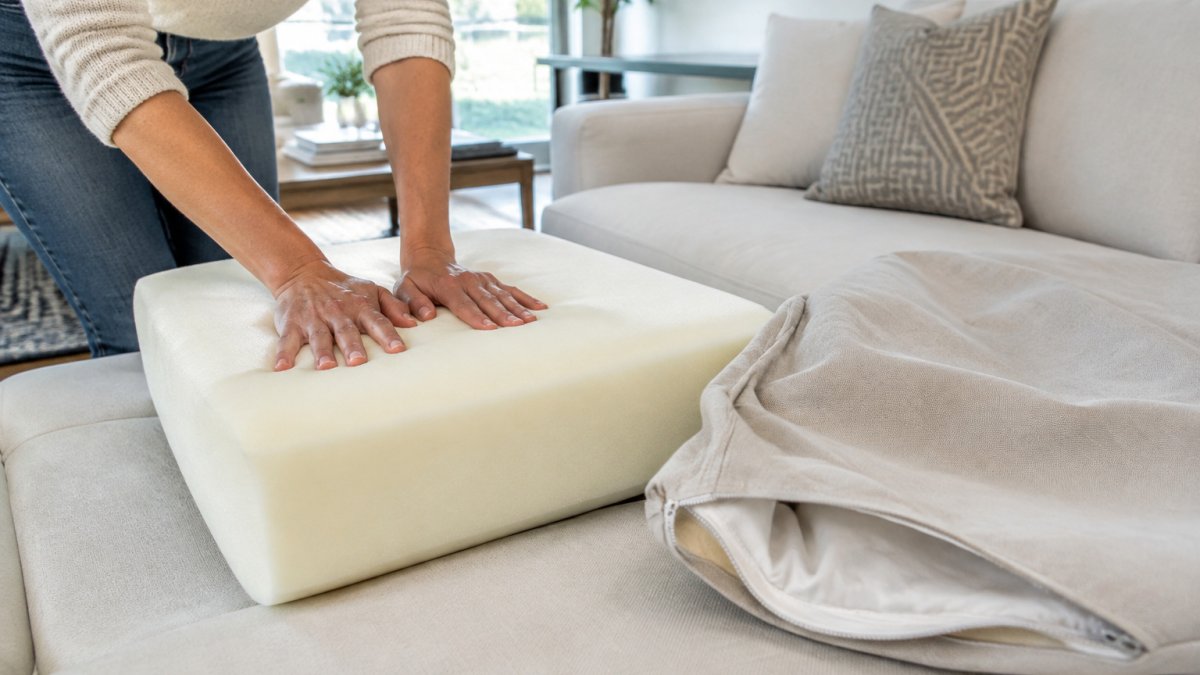
When replacing an old insert, measure the cushion cover first, then choose a new insert that fits without forcing it. A snug fit keeps the cushion from bunching. Pressing your hand into the insert in the store is a practical test: foam should spring back quickly, while fiber should feel full without going flat.
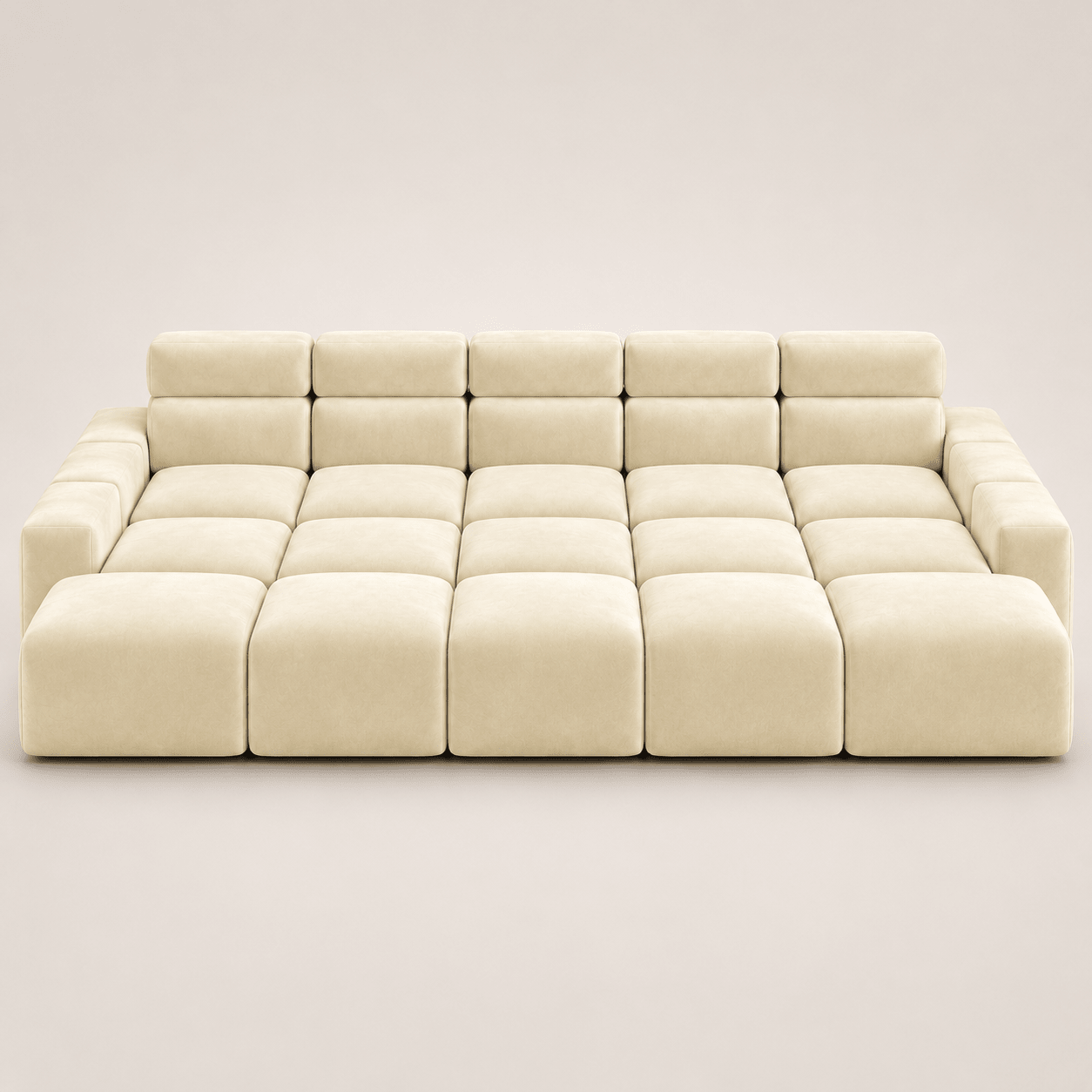
Browse the Tom Collins Home sofa collection to compare sizes, or check the Cove Solstice Extra-Deep Sofa for its extra depth.
For more on keeping a sofa looking good for years, read Why Choose California Made Furniture. If you are still deciding on a layout, our guide to best sectional sofas for small spaces covers cushion options for compact rooms.
Choosing the right filling is about matching support and softness to how you live. Tom Collins Home builds handcrafted sofas designed to hold their shape, so the comfort you feel at the store lasts at home.
Frequently Asked Questions
What is the most comfortable type of cushion filling for a couch?
Comfort depends on whether you want softness or support. Down and feather feel plush and sink in, but they need regular fluffing. Medium-firm foam gives steady support for relaxed seating. Many people find a foam core wrapped in fiber or down the best balance of a soft surface with a firm base that holds its form.
Which is better, 32-density foam or 40-density foam?
Density refers to how much foam is packed into each cubic foot, and higher density generally means more durability and support. A 40-density foam will typically hold its shape longer and resist sagging better than 32-density foam, but it can feel firmer. For a sofa used every day, the higher density usually lasts longer. For a seat that is mainly decorative or used occasionally, 32-density can feel softer without much trade-off.
How often should sofa cushion filling be replaced?
Foam cushions often need replacing after several years of daily use, especially once they stop springing back or develop a permanent dip. Fiber fills can flatten sooner and may need fluffing or a refill. Down and feather inserts can last a long time if fluffed regularly and kept dry. If a cushion no longer supports you or leaves a visible hollow, replacing the insert is usually better than adding more padding on top.
What is the best filling for sofa back cushions?
Back cushions usually benefit from a filling that balances softness with some resistance. A soft foam core wrapped in fiber or a down blend gives a comfortable back without collapsing. Loose back cushions, like those on the Bellini Sofa, look relaxed and can be fluffed or rearranged, which suits fiber and down fills. If you lean hard against the back, a medium-firm foam core keeps its shape better over time.


