



Why Solid Wood Furniture Lasts Longer
Table of Contents
- How Solid Wood Differs From Engineered Wood
- Why Solid Wood Furniture Lasts Longer
- The Benefits of Solid Wood Furniture
- How to Maintain Solid Wood Furniture
- Longevity and Investment Value
- Frequently Asked Questions
Last Updated: September 2, 2026
How Solid Wood Differs From Engineered Wood
The difference between solid wood furniture and engineered alternatives comes down to material composition and construction integrity. Solid wood furniture lasts longer because it's built from whole pieces of timber, whereas engineered wood relies on veneers, particleboard, or medium-density fiberboard (MDF) bonded together with adhesives. This fundamental distinction shapes everything about durability, repairability, and longevity.
Structural Integrity and Material Composition
Solid wood maintains its structural integrity because the wood fibers run continuously through the entire piece. When you're examining a solid wood table or sofa frame, you're looking at timber that has been carefully selected, dried to the proper moisture content, and joined using time-tested techniques. Engineered wood, by contrast, uses thin veneers of real wood glued over a particleboard or MDF core. The adhesives holding these layers together can fail over time, especially in environments with fluctuating humidity.
The cellular structure of solid wood gives it inherent strength. Wood fibers have tensile strength that resists pulling forces and compressive strength that handles weight. Particleboard and MDF lack these properties, they're made from wood particles and fibers compressed and glued together, creating a material that's weaker, more prone to swelling when exposed to moisture, and far more difficult to repair once damaged. A solid wood piece can be sanded, refinished, or have joints re-glued. Engineered wood, once damaged, often cannot be meaningfully restored.
At Tom Collins Home, we build our dining tables and case pieces from solid hardwoods like ash, walnut, and oak specifically because these materials deliver the structural performance that lasts decades. The Greyhound Dining Table in Light Ash exemplifies this approach, crafted from solid ash wood, it provides the kind of durability that engineered alternatives simply cannot match.

Joinery and Construction Methods
How pieces are assembled matters as much as what they're made from. Solid wood furniture typically uses traditional joinery techniques, mortise and tenon joints, dovetail joints, and tongue-and-groove connections, that create mechanical strength without relying solely on adhesives. These joints lock pieces together through their geometry, distributing stress across wider surfaces and allowing for natural wood movement.
Engineered wood pieces often rely on staples, nails, and corner blocks reinforced with glue. While adequate for short-term use, these methods don't accommodate the natural expansion and contraction that occurs as wood responds to humidity changes. Solid wood joinery anticipates this movement, allowing joints to flex slightly without failing. A mortise and tenon joint, for instance, creates a connection strong enough to support weight while permitting the slight seasonal shifts that solid wood naturally undergoes.
The craftsmanship visible in solid wood construction reflects decades of refinement. Skilled woodworkers understand how different wood species move, how to orient grain for maximum strength, and how to execute joinery that will outlast the original builder. This knowledge doesn't transfer to engineered wood assembly, which is primarily a manufacturing process optimized for speed and cost reduction rather than longevity.
Why Solid Wood Furniture Lasts Longer
Solid wood furniture lasts longer because the material itself resists degradation, the construction methods accommodate natural wood movement, and damage can be repaired rather than hidden. These three factors compound over time, turning a solid wood piece into something that can genuinely become an heirloom.
Wood Fiber Stability and Moisture Resistance
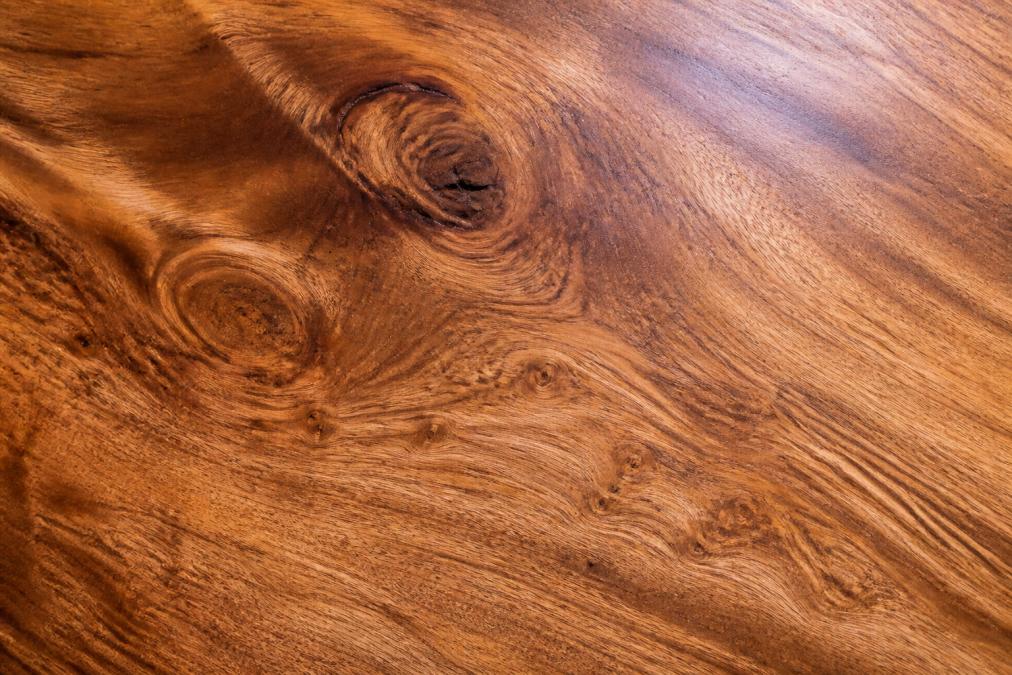
Wood fibers naturally contain moisture. The amount varies depending on the wood species, the climate where it grew, and how it's been dried. Properly kiln-dried solid wood reaches an equilibrium moisture content that makes it stable for indoor use. This doesn't mean solid wood is immune to humidity changes, it absolutely responds to them. But because the wood fibers are intact and continuous, the material expands and contracts in predictable, manageable ways.
Engineered wood's veneer and particleboard core respond differently to moisture. The adhesives binding the layers can weaken as humidity fluctuates. Particleboard absorbs moisture more readily than solid wood and swells unevenly, causing the veneer to bubble or separate. MDF is particularly vulnerable, it can swell to twice its original thickness if exposed to sustained moisture (peer-reviewed research). These failures are permanent. Once the adhesive fails and the veneer separates, the piece is essentially ruined.
Solid wood's natural resistance to moisture-related failure comes from the stability of the wood fibers themselves. While the wood will move slightly with humidity changes, the fibers maintain their integrity. A solid wood tabletop may shift a fraction of an inch seasonally, but it won't delaminate, bubble, or become unusable. This is why antique solid wood furniture, pieces that are 100, 200, or even 300 years old, still functions, while engineered furniture from the 1990s is often already falling apart.
Resistance to Daily Wear and Tear
Every piece of furniture experiences daily wear. Sofas get sat on, tables get bumped and stained, chairs get dragged across floors. Solid wood handles this punishment differently than engineered alternatives.
A dent or scratch in solid wood is superficial, it affects only the surface finish, not the structural integrity of the piece. These marks can be sanded out and refinished, returning the piece to like-new condition. More importantly, solid wood doesn't splinter or crumble the way particleboard does. If a solid wood table leg gets knocked, the wood may dent slightly, but the fibers remain intact. A particleboard leg hit the same way can crack, splinter, or crumble because the material lacks the cohesion of continuous wood fibers.
Solid wood's ability to withstand impact comes from the resilience of the wood fibers. Hardwoods like ash, walnut, and oak have high density and tight grain structure, making them resistant to denting and scratching. Over time, these minor marks develop a patina that many people find beautiful, evidence of a piece that's been lived with rather than preserved in a museum. Engineered wood, by contrast, shows damage as deterioration. Once the veneer is scratched or the particleboard is dented, the damage is permanent and visible.
The Benefits of Solid Wood Furniture
Beyond durability, solid wood furniture delivers aesthetic and environmental benefits that engineered alternatives cannot match. These benefits compound over time, making the initial investment in solid wood increasingly valuable.
Refinishing and Long-Term Value
The ability to refinish solid wood furniture is perhaps its greatest advantage. A solid wood table that's been in daily use for 20 years can be sanded down and refinished to look brand new. The finish might be changed, from a matte oil finish to a glossy lacquer, or vice versa, giving the piece an entirely new character without replacing it.
This refinishing capability has profound implications for long-term value. A solid wood piece can be passed down through generations, refinished as needed, and continue to serve its purpose. Each refinishing extends the piece's life indefinitely. An engineered wood piece, once the veneer is damaged or the particleboard begins to fail, cannot be meaningfully refinished. The damage is structural, not cosmetic.
Solid wood furniture also develops a natural patina over time. The finish deepens, the wood grain becomes more pronounced, and the piece develops character that cannot be replicated on new furniture. This aging process is part of what makes solid wood pieces feel like investments rather than temporary purchases. A solid wood dining table used daily for 30 years will have a richness and depth that no new table can match, and it will still be structurally sound and fully functional.

Environmental Sustainability
Solid wood furniture, when sourced from responsibly managed forests, represents a more sustainable choice than engineered alternatives. Solid wood uses the entire tree or large sections of it, with minimal waste. Engineered wood, by contrast, often incorporates adhesives and binders that contain formaldehyde or other volatile organic compounds (VOCs) (the EPA). These chemicals off-gas over time, contributing to indoor air quality issues and environmental contamination.
Because solid wood furniture lasts decades or longer, the environmental cost is amortized over a much longer period. A solid wood table used for 50 years has a lower environmental impact per year of use than an engineered table replaced every 10 years. The manufacturing of engineered wood is also more energy-intensive, requiring multiple processing steps, adhesive application, and finishing processes that generate waste.
The wood species used matters significantly. Sustainably harvested hardwoods from managed forests represent a renewable resource. When a solid wood piece reaches the end of its life, which may be 100+ years, it can be reclaimed, repurposed, or composted. Engineered wood, with its adhesives and composite materials, is far less likely to be recycled or composted effectively.
How to Maintain Solid Wood Furniture
Solid wood furniture's longevity depends partly on proper care. Maintenance isn't complicated, but it does require understanding how solid wood responds to its environment.
Climate Control and Humidity Management
The single most important factor in solid wood furniture longevity is stable humidity. Wood expands when humidity increases and contracts when it decreases. Seasonal changes in humidity are normal and manageable, solid wood is designed to accommodate them. Extreme fluctuations or sustained high or low humidity, however, can cause problems.
Ideal indoor humidity for solid wood furniture is between 35% and 55%. In winter, when heating systems dry out indoor air, humidity often drops below 30% (the CDC). This can cause solid wood to shrink excessively, leading to gaps in joints or cracks in table tops. In summer or in humid climates, humidity above 60% can cause swelling and warping. Using a humidifier in winter and a dehumidifier in summer helps maintain stable conditions.
Avoid placing solid wood furniture in direct sunlight for extended periods. UV exposure fades the finish and can cause uneven color changes. Similarly, keep furniture away from heat sources like radiators, fireplaces, or air conditioning vents. These create localized humidity and temperature extremes that solid wood cannot accommodate.
Cleaning and Protective Finishes
Regular cleaning maintains the protective finish that shields solid wood from moisture and dirt. A soft, slightly damp cloth removes dust without damaging the finish. For deeper cleaning, use a wood cleaner specifically formulated for the finish type, oil finishes, lacquer finishes, and wax finishes each require different care approaches.
The finish itself, whether lacquer, oil, or another protective agent, is the primary barrier between the wood and the environment. Maintaining this finish is critical. For oil-finished pieces, periodic re-oiling replenishes the protective layer. For lacquered pieces, avoid harsh chemicals that can strip or dull the finish. Waxed finishes benefit from occasional re-waxing to maintain their protective properties.
Spills should be cleaned immediately to prevent moisture from penetrating the finish. Use coasters under glasses, placemats under plates, and trivets under hot dishes. These simple practices prevent the finish from being compromised, which would allow moisture to reach the wood itself.
Longevity and Investment Value
A solid wood dining table or sofa represents a long-term investment in a way that engineered furniture cannot. The initial cost is higher, a solid wood piece from Tom Collins Home reflects the quality of materials and craftsmanship involved. But when you calculate the cost per year of use over a 30, 50, or 100-year lifespan, solid wood becomes economically sensible.
Consider a solid wood table purchased for $2,000 that lasts 40 years. The cost is $50 per year. An engineered table purchased for $600 that lasts 8 years costs $75 per year. The solid wood table is not only more durable, it's actually more cost-effective. And unlike the engineered table, the solid wood piece can be refinished, repaired, and passed down, extending its useful life indefinitely.
The aesthetic argument is equally compelling. Solid wood furniture develops character over time. The finish deepens, the wood grain becomes more pronounced, and the piece gains a patina that reflects its history. This is why antique solid wood furniture commands premium prices. A 100-year-old solid wood table is more valuable today than it was 50 years ago, despite (or because of) its age. Engineered furniture depreciates immediately and continues to lose value as it ages.
Solid wood furniture also adapts to changing design preferences. A solid wood piece can be refinished in a new color or style, allowing it to fit into different décors across generations. Engineered furniture, locked into its original finish and unable to be meaningfully refinished, becomes dated and disposable.
Solid wood furniture lasts longer because the material resists degradation, traditional joinery accommodates natural wood movement, and damage can be repaired rather than hidden. When you invest in solid wood from Tom Collins Home, pieces like the Brown Derby Round Dining in Light Ash or the Pink Lady Dining Table in Light Ash, you're choosing furniture built to outlast trends and serve your home for decades. These handcrafted pieces are designed in Southern California with the kind of attention to joinery, wood selection, and finishing that transforms furniture into heirlooms. Get started with Tom Collins Home and invest in pieces that will be as functional and beautiful in 30 years as they are today.

Frequently Asked Questions
How does solid wood furniture compare to particle board in terms of lifespan?
Solid wood furniture typically lasts 20-30 years or longer with proper care, while particleboard and MDF often fail within 5-10 years. Particleboard lacks the structural integrity of solid wood because it's made from compressed wood fibers and adhesives that break down over time. Solid wood fibers remain stable through humidity fluctuations, while engineered materials swell and warp. This is why solid wood furniture lasts longer, the cellular structure of real hardwood resists daily wear and tear far more effectively than synthetic alternatives.
Is solid wood furniture worth the higher price point?
Yes, when you calculate lifecycle cost. A solid wood dining table at $1,886.50 (like the Pink Lady) lasts 25+ years, costing roughly $75 per year. A particleboard table at $400 lasts 7 years, costing $57 per year upfront but requiring replacement three times over the same period. Over 25 years, you'd spend $1,200 on replacements versus one solid wood investment. Beyond cost, solid wood can be refinished, resanded, and restored, making it a true long-term investment rather than disposable furniture.
Can high-quality wood furniture truly last for generations?
Absolutely. Solid wood furniture with proper joinery (mortise and tenon joints rather than staples or dowels) can last 50+ years and be passed down as heirloom pieces. Antiques made from solid hardwood centuries ago still function perfectly today. The key is quality construction, appropriate wood species for the climate, and regular maintenance. Pieces that resist moisture content changes, have stable joinery, and are finished with quality lacquer or oil finishes maintain their structural integrity across generations.
What factors contribute to the structural integrity of handcrafted furniture?
Structural integrity depends on wood species selection, joinery technique, and finishing quality. Handcrafted pieces use mortise and tenon joints that distribute stress evenly, while mass-produced furniture relies on staples and nails that fail under pressure. The wood itself matters, hardwoods like ash have higher tensile strength than softwoods or engineered alternatives. Quality finishing agents (lacquer, oil, or polyurethane) protect against humidity fluctuations that cause warping and shrinkage. Proper construction accounts for wood grain direction and natural expansion, preventing the cracking and splitting common in poorly made furniture.


