



Durable Dining Table Finishes: A Family Buying Guide
Last Updated: November 22, 2026
Quick Summary
Catalyzed lacquer and conversion varnish are the most durable dining table finishes for families, offering high resistance to water, heat, and scratches. Polyurethane follows as the most common family choice, while hardwax oil and natural oil rank lower for protection but are far easier to repair.
- A finish is durable when it resists moisture, heat, abrasion, and impact.
- Polyurethane falls short on heat, so always use trivets under hot dishes.
- Hardwax oil and natural oil are the most repairable finishes for spot fixes.
- Catalyzed lacquer and conversion varnish are difficult to spot-repair and usually need a shop.
- Sanding through a veneer is permanent, so keep pressure light.
Table of Contents
- What Makes a Dining Table Finish Durable for Family Life
- The Most Durable Finish for a Dining Table: A Ranked Comparison
- Polyurethane vs. Oil Finish for Dining Tables
- What a Scratch-Resistant Dining Table Finish Actually Means
- Water-Resistant Wood Table Finish: Spills, Rings, and Humidity
- Finish Safety, Curing, and Low Chemical Emissions
- Repairing and Refinishing a Family Dining Table Over Time
- Matching a Finish to Your Household Priorities
- Frequently Asked Questions
What Makes a Dining Table Finish Durable for Family Life
A dining table finish is durable when it resists the four forces that destroy most family tables: moisture, heat, abrasion, and impact. The coating matters more than the wood species underneath it. A solid oak table with a weak finish will show water rings and scratches long before a well-sealed ash table does.
The wood is the body; the finish is the armor. The durability of a family table often comes down to what sits on top of the grain, not the grain itself.
Below, we rank the most durable dining table finishes for families, compare dining table finishes on cost and repairability, and show you how to match a coating to the way your household actually lives.
The Four Hazards Every Family Table Faces
Most buying guides talk about "durability" as a single quality. It isn't. Four separate threats wear a table down, and each coating handles them differently:
- Moisture from glasses, spills, and humid rooms, which swells wood and clouds finishes
- Heat from hot plates and serving dishes, which softens and blisters coatings
- Abrasion from daily place settings, homework, and sliding chairs
- Impact from dropped cups, toys, and the occasional fork
A finish that shrugs off water may fail at heat. One that resists scratches may be hard to repair. Keep these four in mind as you read the rankings.
The Most Durable Finish for a Dining Table: A Ranked Comparison
Among common family-table finishes, catalyzed lacquer and conversion varnish generally offer the greatest resistance to daily wear, followed by polyurethane, hardwax oil and natural oil. That ranking assumes a household that wants maximum protection with minimal upkeep. If you are willing to maintain the surface, hardwax oil and natural oil move up the list because they are far easier to repair.
Here is how the five common family-table finishes stack up on the hazards that matter most.
| Finish | Water Resistance | Heat Resistance | Scratch Resistance | Repairability | Relative Cost |
|---|---|---|---|---|---|
| Catalyzed lacquer | High | High | High | Low | Higher |
| Conversion varnish | High | High | High | Low | Higher |
| Polyurethane | High | Medium | High | Medium | Moderate |
| Hardwax oil | Medium | Low | Medium | High | Moderate |
| Natural oil | Low | Low | Low | High | Lower |
How Each Finish Actually Works
1. Catalyzed lacquer. A two-part coating that cures through a chemical reaction rather than simple solvent evaporation.
2. Conversion varnish. Often described as the hardest film finish available and common on commercial tables.
3. Polyurethane. The most common family-table finish for good reason. Water-based and oil-based versions both form a tough film that handles spills and scratches.
4. Hardwax oil. Penetrates the wood rather than sitting on top, leaving a matte, natural feel.
5. Natural oil. The most traditional and repairable option, with the softest feel and the least protection.
Matching the Finish to the Hazard
A finish that shrugs off water may fail at heat. One that resists scratches may be hard to repair. Use the four hazards to narrow the choice:
- Moisture: Film finishes (catalyzed lacquer, conversion varnish, polyurethane) resist water rings better than oils because moisture sits on the surface instead of soaking in.
- Heat: Catalyzed lacquer and conversion varnish hold up best; polyurethane softens under a hot dish, and oils offer little protection.
- Abrasion: Hard film finishes deflect daily wear from plates and toys; oils are softer and show more marks.
- Impact: A hard film can chip under a dropped cup, while an oil finish dents and blends. Neither is immune.
Watch out: a finish described as "durable" without a named coating tells you almost nothing. Ask what the finish is and how it is applied before you compare tables.
Polyurethane vs. Oil Finish for Dining Tables
Polyurethane wins for families who want low-maintenance protection; oil wins for families who value repairability and a natural feel over maximum toughness. The right choice depends on whether you'd rather prevent damage or fix it.
Polyurethane builds a protective film on the surface. Spilled juice beads up, and a quick wipe handles most messes.
Oil soaks into the grain and hardens it from within. Scratches blend in, and a light sanding plus a fresh coat restores the surface. The catch is upkeep.
For a family with young kids and limited time, polyurethane is often the more practical choice. To see how a white oak veneer table reads with a protective film finish, browse the Cosmopolitan Racetrack Dining Table in White Oak Veneer.
What a Scratch-Resistant Dining Table Finish Actually Means
A scratch-resistant finish is one hard enough to resist everyday abrasion, not one that cannot scratch. No clear coating is scratch-proof. The goal is to make minor marks rare and shallow.
Film finishes like polyurethane and catalyzed lacquer create a hard shell that deflects keys, plates, and toy corners.
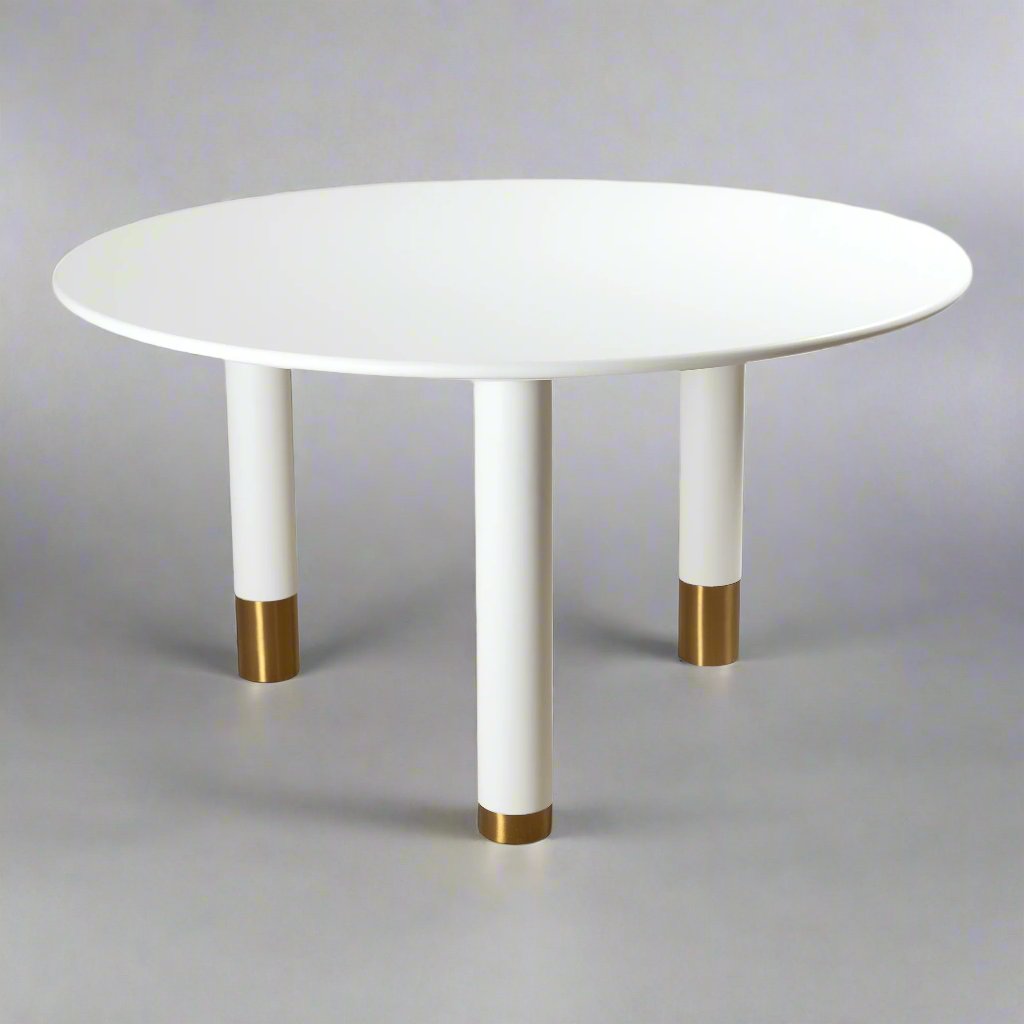
What most guides miss is that scratch resistance and repairability pull in opposite directions. If you want a finish that demonstrates this balance, a matte lacquer top is a good reference point, like the Rick's Cafe Round Dining Table in Matte White Lacquer.
Water-Resistant Wood Table Finish: Spills, Rings, and Humidity
A water-resistant wood table finish slows moisture absorption long enough for you to wipe a spill, and that window is what saves the table. No finish makes wood fully waterproof.
White rings come from moisture trapped in the coating, not the wood itself. A film finish resists them better than an oil, which is why busy families often prefer polyurethane or lacquer.
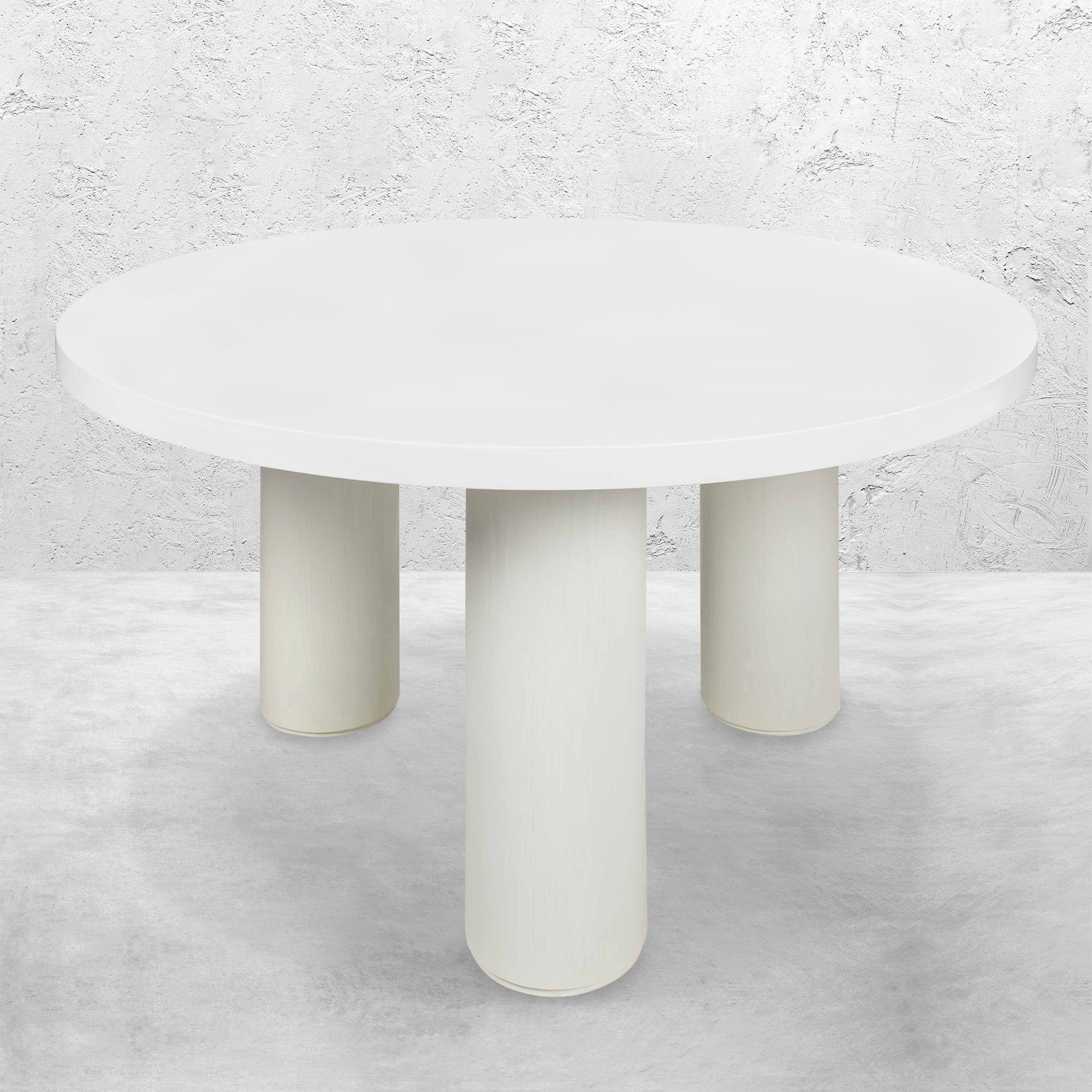
For households worried about spills and everyday humidity, a matte-top table with a sealed surface is a practical choice. The Tia Maria Round Dining Table with Matte White Top and White Washed Oak Base has a matte white round tabletop and a three-column base finished in whitewashed oak veneer.
Finish Safety, Curing, and Low Chemical Emissions
Finish safety comes down to curing, not just ingredients. A fully cured finish is stable and safe for family use; a finish that is still off-gassing is not.
Low-VOC and water-based finishes generally reduce emissions and are a sensible pick for nurseries, small dining rooms, and anyone sensitive to fumes. Ask any maker what the finish is and how long it needs to cure before delivery.
Repairing and Refinishing a Family Dining Table Over Time
Repairability is the finish quality families overlook most, and it decides how a table ages. A repairable finish lets you fix a scratch in minutes; a hard film finish may need a professional.
Which Finishes Can Be Spot-Repaired
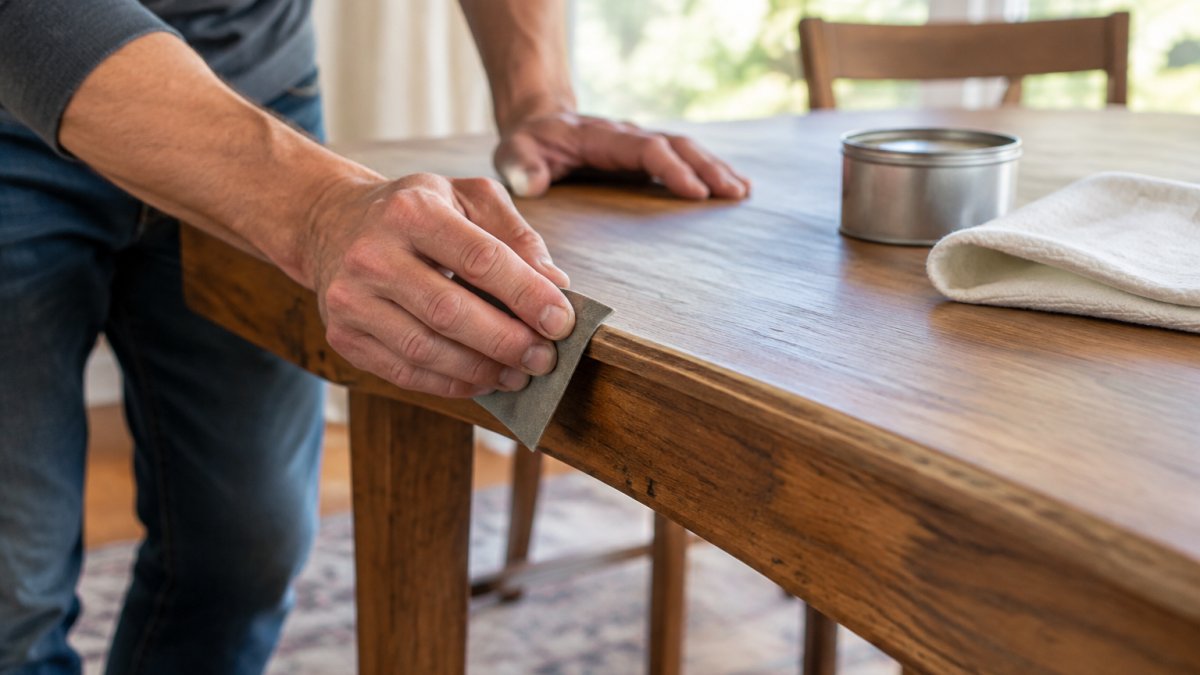
- Hardwax oil and natural oil: The most repairable. A light sanding with fine-grit paper followed by a fresh coat of the same oil blends the repair into the surrounding surface. Small scratches often disappear with a fresh coat alone.
- Polyurethane: Spot-repairable with care. Sand the damaged area, apply the same product in thin coats, and feather the edges. The risk is a visible halo where the new film meets the old, especially on glossy surfaces.
- Catalyzed lacquer and conversion varnish: Difficult to spot-repair. The cured film does not melt back into itself, so a deep scratch usually means sanding and recoating a larger area, which is a shop job.
Sanding and Recoating Over Time
A solid wood table can be sanded and refinished more than once, which is why the wood underneath matters as much as the coating. Film finishes are typically removed by sanding before a new coat goes on; oils are refreshed by cleaning and recoating without full removal. A table with a repairable finish can be refreshed in place, while a hard film finish may need a full refinish after years of wear.
Here is one way to approach a tired family table:
- Assess the damage. Light scratches in an oil finish often blend with a fresh coat. Deep gouges in a film finish need sanding and spot-refinishing.
- Match the product. Re-oil oiled tables; use the same polyurethane or lacquer on film finishes.
- Work small. Spot-treat first. Full refinishing is a last resort for a table with widespread wear.
- Plan for the long run. A solid wood table can be sanded and refinished more than once, which is why the wood underneath matters as much as the coating.
Watch out: sanding through a veneer is permanent. Keep pressure light and stop the moment you reach bare wood.
Matching a Finish to Your Household Priorities
The right finish is the one that matches how your household actually lives, not the hardest coating on the chart. Match the finish to the family, and the table lasts.
- Young kids and constant spills: polyurethane or catalyzed lacquer for water and scratch resistance.
- Frequent entertaining with hot dishes: a hard film finish plus trivets for heat.
- A design-first home that wants a natural feel: hardwax oil, with a maintenance routine.
- A table you plan to keep for decades: solid wood with a repairable finish you can refresh.
If you're still deciding on style alongside finish, our guide to modern dining tables walks through shapes and materials, and our roundup of the best handcrafted dining tables shows how finishes hold up across real pieces.
Choosing a family dining table means choosing a finish you can live with for years, not just one that looks good on delivery day.
Frequently Asked Questions
What is the most durable finish for a dining table?
Catalyzed lacquer and conversion varnish rank highest for daily family use because they resist scratches, water rings, and heat better than oil or wax. Polyurethane is the most accessible high-durability option and holds up well to spills and scrubbing. Oil finishes look beautiful and are easy to spot-repair, but they need reapplication every year or two and offer less protection against standing water and heat. Match the finish to your household rather than chasing one universal winner.
Is polyurethane or oil better for a dining table with kids?
Polyurethane usually wins in homes with young children. It forms a film on the surface that blocks spilled juice, glue, and scrubbing, and it handles daily wipe-downs without dulling. Oil finishes soak into the wood and leave a more natural feel, but they need re-oiling and are more vulnerable to rings from a sweating glass. If you choose oil for its look, plan on a yearly maintenance session and use coasters and placemats consistently.
Which dining table finishes resist scratches and stains?
Film finishes such as catalyzed lacquer, conversion varnish, and polyurethane resist scratches and stains best because the coating sits on top of the wood and takes the wear itself. Matte and satin sheens hide fine scratches better than high gloss, which shows every mark. Oil and wax finishes show scratches sooner but are easier to repair locally. Whatever the finish, felt pads under chairs and a table pad under hot dishes extend its life considerably.
Can you refinish a dining table when its finish wears out?
Yes. Solid wood tables can be sanded back and refinished, often more than once over their lifetime, which is a major reason solid wood outlasts veneer and laminate. Film finishes need full removal before recoating, while oil finishes can often be refreshed with a light sanding and a new coat. A table with a thick solid top, like solid ash or walnut, has enough material for several refinishing cycles decades apart.
How long should a new finish cure before a family uses the table?
Water-based polyurethane typically cures enough for light use in about 24 hours but keeps hardening for several days to a week. Oil-based polyurethane needs 24 to 48 hours before light use and up to a month to reach full hardness. During the first week, avoid heavy scrubbing, hot dishes directly on the surface, and standing water. Check the product label for the manufacturer's specific cure schedule and follow it.


