



Modern Dining Chairs: A 2026 Buying Guide
Table of Contents
- What Makes Modern Dining Chairs Worth the Investment
- Upholstered Dining Chairs: Comfort, Fabric, and Durability
- Frame Construction, Weight Capacity, and Long-Term Durability
- Dining Chair Height Guide: Matching Chairs to Your Table
- How to Mix and Match Dining Chairs Without Losing Cohesion
- Ergonomics and Sustainability: Two Things Most Buyers Overlook
- Standout Modern Dining Chairs Worth Considering
- Conclusion
Last Updated: August 23, 2026
What Makes Modern Dining Chairs Worth the Investment
Modern dining chairs set the tone for how a room feels and whether your dining space looks considered or assembled by accident. At Tom Collins Home, we've identified three things that separate a chair worth keeping from one replaced in three years: frame construction, upholstery quality, and proportional design.
The market spans entry-level sets prioritizing visual impact to handcrafted pieces built with hospitality-grade standards. Knowing which you're buying requires looking past finish photos into material specs, joinery methods, and fabric performance ratings.
This guide covers upholstery types, frame materials, ergonomic considerations, seat height matching, and how to mix styles without losing cohesion. The cheapest option almost never delivers long-term value, a chair that wobbles after 18 months costs more in the long run than a well-made piece purchased once.
Upholstered Dining Chairs: Comfort, Fabric, and Durability
Upholstered dining chairs dominate modern interiors because they add acoustic softness, provide genuine comfort during long meals, and offer visual warmth that wood or metal alone can't match. The critical variable is fabric selection, as dining environments present one of the highest-stress contexts for fabric: food, drink, daily contact, and regular cleaning cycles.
Velvet and Bouclé: Texture That Earns Its Place at the Table
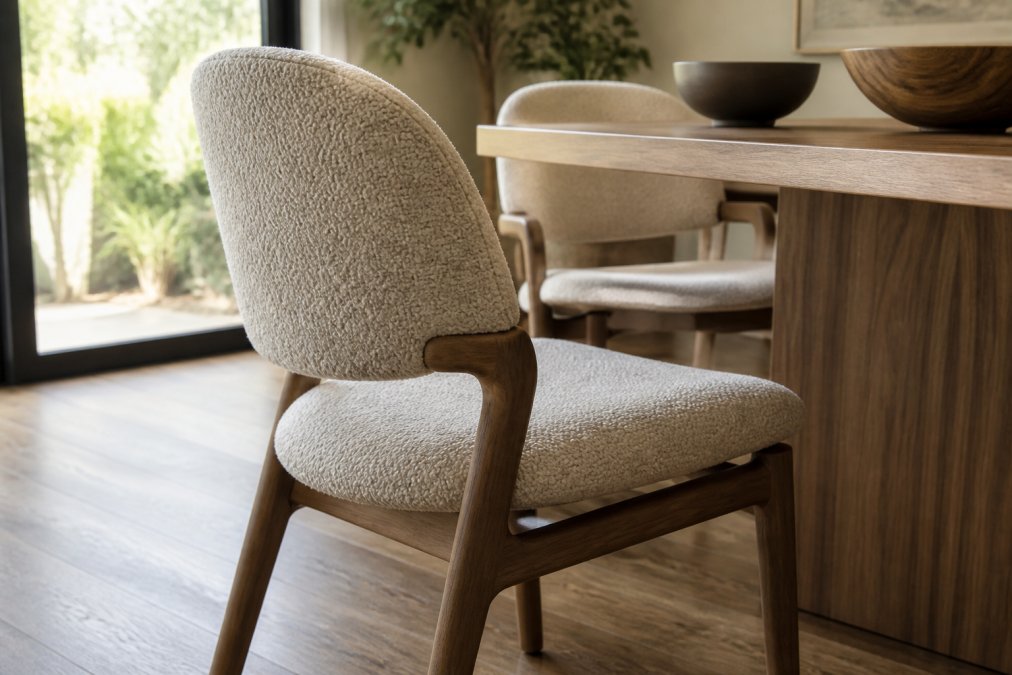
Velvet photographs beautifully and feels luxurious, but attracts lint, shows impressions, and requires careful spot-cleaning. Bouclé, the looped-yarn fabric revived in contemporary design, offers a softer, more forgiving texture that reads as sophisticated without demanding the same maintenance. A sculpted walnut frame paired with ivory bouclé creates visual balance that holds up across decorating trends.
Both materials work best in dining rooms that don't double as high-traffic everyday spaces. For households with young children or frequent casual use, performance fabrics are worth prioritizing.
Performance Fabric and Leather: Built for Everyday Use
Performance fabrics are engineered for high-contact environments, rated for tens of thousands of double-rub cycles, resist staining, and can be wiped clean with a damp cloth. Leather, whether full-grain or top-grain, remains one of the most durable upholstery options, develops a patina over time, and is straightforward to maintain. The tradeoff is temperature sensitivity.
According to the American Home Furnishings Alliance's material durability guidance, upholstery performance is determined by fiber content, weave density, and backing construction, not brand name alone. Always ask for the double-rub rating and cleaning code before committing.
Frame Construction, Weight Capacity, and Long-Term Durability
The frame determines whether a chair lasts five years or twenty-five.
Solid Wood Frames: Teak, Oak, and Walnut Compared
Solid wood frames represent the gold standard for modern dining chairs. Teak is exceptionally dense and naturally oil-rich, making it highly resistant to moisture. Oak offers a lighter visual character with pronounced grain, pairs well with muted upholstery, and suits Scandinavian aesthetics. Walnut is the darkest with a fine grain and natural warmth associated with mid-century modern and contemporary Italian design.
Engineered wood and MDF frames are significantly less durable and prone to joint failure. For long-term investment pieces, solid hardwood is non-negotiable.
Weight Capacity and Structural Integrity
Weight capacity matters for both safety and longevity. A chair rated for lower limits will experience accelerated joint wear when used regularly at or near capacity. Structural failures in seating furniture are among the more common causes of home injury.
Look for chairs with mortise-and-tenon or dowel joinery rather than staple-and-glue construction. Corner blocks inside the seat frame add significant rigidity. When testing a chair in person, apply lateral pressure to the backrest, there should be minimal flex.
Dining Chair Height Guide: Matching Chairs to Your Table
Seat height plus table clearance determines comfort. Standard dining tables sit between 28 and 30 inches tall. The ideal seat height for most adults is between 17 and 19 inches, leaving approximately 10 to 12 inches of clearance between the seat surface and the table underside.
| Table Height | Recommended Seat Height | Clearance |
|---|---|---|
| 28 inches | 16-18 inches | 10-12 inches |
| 29-30 inches | 17-19 inches | 10-12 inches |
| 36 inches (counter) | 24-26 inches | 10-12 inches |
| 42 inches (bar) | 28-30 inches | 12-14 inches |
Counter-height and bar-height tables require correspondingly taller chairs or stools. For armchairs used at the dining table, verify that the armrest height clears the table apron.
How to Mix and Match Dining Chairs Without Losing Cohesion
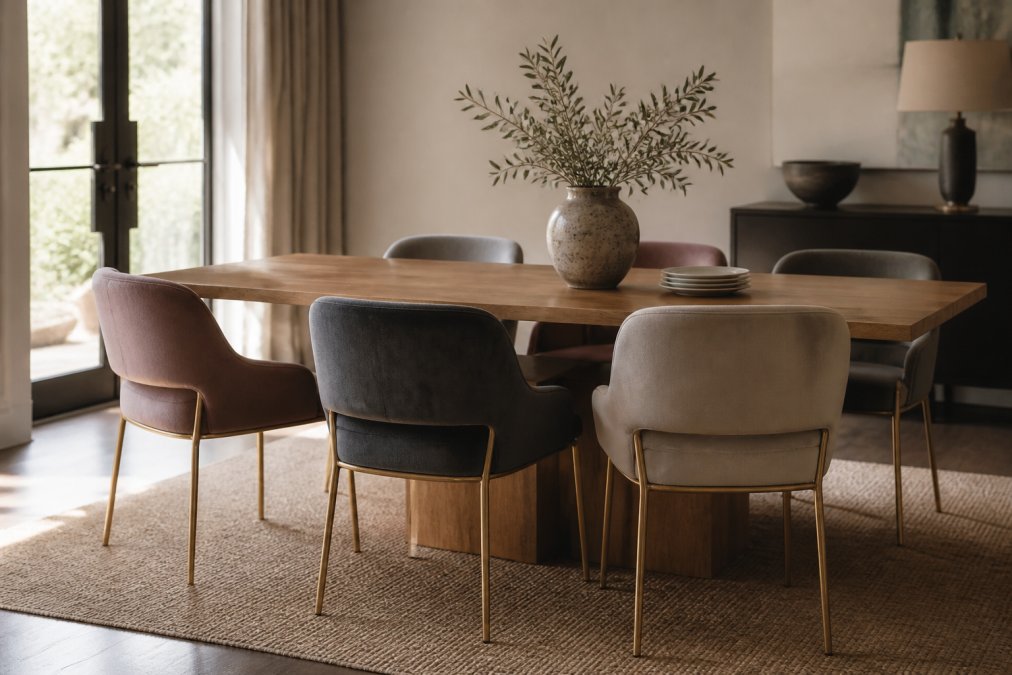
Mixing dining chairs well makes a room feel curated and intentional. The most reliable approach is to anchor the mix with one consistent element, then vary everything else. That anchor can be frame material, upholstery tone, or silhouette scale.
A practical formula that works consistently: four matching side chairs plus two distinct armchairs at the heads of the table. The armchairs signal hierarchy and intention; the matching sides provide visual calm. This allows you to introduce a bolder fabric on the armchairs without chaos.
Ergonomics and Sustainability: Two Things Most Buyers Overlook
Most buyers evaluate dining chairs on aesthetics first, price second, and construction third. Ergonomics and sustainability deserve more attention.
Ergonomic Assessment for Long-Duration Seating
Ergonomic design for dining chairs differs from office chair ergonomics. The goal is comfort for one to three hours of relaxed social dining, which involves more movement and varied positions.
Features that matter most for long-duration dining comfort are:
- Backrest angle: A slight recline of 5 to 10 degrees from vertical reduces lower back fatigue (peer-reviewed research)
- Seat depth: 15 to 17 inches suits most adults; deeper seats cause shorter users to perch on the edge
- Cushion density: High-resilience foam holds its shape over time; low-density foam compresses within a year or two
- Lumbar contact: A cylindrical backrest cushion contacting the lumbar region provides targeted support
As referenced in ergonomic seating research from Cornell University's Human Factors and Ergonomics Research Group, seat pan angle and lumbar support are most predictive of comfort during extended seated activity. A common mistake is prioritizing visual profile over seat depth, low-profile chairs with shallow seats become uncomfortable within 45 minutes.
Material Sourcing and Sustainability Considerations
For solid wood frames, look for species sourced from responsibly managed forests. The Forest Stewardship Council certification is the most recognized standard for verified sustainable timber sourcing. Foam composition matters more than most buyers realize, soy-based or plant-derived foams are more sustainable alternatives that perform comparably in high-resilience applications.
The most sustainable piece of furniture is one built to last long enough that it never needs replacing. Handcrafted solid wood frames with quality joinery and replaceable upholstery components represent a fundamentally more sustainable model than disposable furniture.
Standout Modern Dining Chairs Worth Considering
The modern dining chairs market rewards those who look past the visual and into the specification.
1. Tom Collins Home Boulevardier Dining Chair A sculpted walnut frame supports softly upholstered ivory bouclé seating, built to hospitality-grade construction standards. Sized to coordinate with standard dining tables with quietly tailored design that holds up across interior trends. Made to order with an 8 to 12 week lead time; contact Tom Collins Home directly for pricing.
2. Tom Collins Home Southside Dining Chair Built around a solid light oak frame with an architectural silhouette, the Southside pairs a generously padded seat in muted olive velvet with a cylindrical backrest cushion designed for lumbar support. Suits minimalist Scandinavian, mid-century modern, and modern farmhouse aesthetics. Custom upholstery options are available.
3. Tom Collins Home Moscow Mule Dining Chair A compact, contemporary velvet dining chair with tapered legs and rounded cylindrical backrest. Available in five velvet colorways including Smoke Mocha, Pumpkin Spice, and Cream. The natural wood frame with clean lines makes it versatile, and the compact footprint works well in smaller dining spaces.
4. Tom Collins Home Vodka Soda Dining Chair Brings armrests into the equation, adding formal comfort suited to longer meals. The upright profile in premium velvet reads as elegant without being stiff. Available in the same five-color velvet range as the Moscow Mule, making mixing the two across a table an easy, cohesive option.
5. Tom Collins Home Pain Killer Dining Chair A low-back, wide-profile chair with a relaxed silhouette suited to casual dining environments. The solid frame construction keeps it structurally sound despite the low-back design. Available in five velvet colors. Worth seeing in person before committing.
| Chair | Frame | Upholstery | Best For |
|---|---|---|---|
| Boulevardier | Sculpted walnut | Ivory bouclé | Formal dining, long meals |
| Southside | Light oak | Muted olive velvet | Minimalist, Scandinavian rooms |
| Moscow Mule | Natural wood, tapered legs | Velvet, 5 colorways | Compact spaces, mixed sets |
| Vodka Soda | Solid hardwood | Velvet with armrests | Semi-formal, head-of-table use |
| Pain Killer | Solid frame | Velvet, low back | Casual dining, relaxed settings |
Choosing modern dining chairs that hold up structurally and aesthetically requires scrutiny into solid hardwood frames, quality upholstery, and considered ergonomic proportions. Tom Collins Home's handcrafted dining chair collection, designed in Southern California and built to hospitality-grade standards, addresses each dimension directly. Explore the full range and contact the team for current pricing and lead times.
=== FAQ ANSWERS (audit these too, same rules) ===
[1] Q: What dining chair styles are trending in 2026? A: Sculptural silhouettes with tactile upholstery are leading in 2026. Bouclé, velvet, and performance fabric seats paired with solid wood frames in walnut or oak dominate the modern aesthetic. Rounded backrests, tapered legs, and Scandinavian-influenced minimalism remain strong. Armchairs at the head of the table have also grown in popularity, adding visual weight and comfort to otherwise uniform sets.
[2] Q: How do I choose the right size dining chair for my table? A: The standard seat height for modern dining chairs is 17 to 19 inches from the floor. Pair this with a dining table that sits between 28 and 30 inches tall, leaving roughly 10 to 12 inches of clearance between the seat and the tabletop. For tables with aprons or stretchers, measure the clearance before ordering. Counter-height tables at 34 to 36 inches require counter stools rather than standard dining chairs.
[3] Q: Are upholstered dining chairs practical for everyday use? A: Yes, provided you choose the right fabric. Performance fabrics rated for high rub counts resist staining and wear better than standard wovens. Velvet and bouclé add texture and warmth but benefit from prompt spot-cleaning. Leather and faux leather wipe down easily and hold up well in households with children or pets. The frame construction matters as much as the fabric, solid hardwood frames outlast engineered wood alternatives significantly.
[4] Q: Can I mix different dining chair styles at one table? A: Yes, and done well, it adds personality rather than visual clutter. The most reliable approach is to anchor the set with a shared element: the same frame finish, a consistent upholstery color family, or a repeated leg style. Mixing a side chair with an armchair at the head positions works especially well. Avoid combining more than two distinct silhouettes at a single table, as the result tends to feel unresolved rather than curated.
Frequently Asked Questions
Q: What dining chair styles are trending in 2026?
A: Sculptural silhouettes with tactile upholstery are leading in 2026. Bouclé, velvet, and performance fabric seats paired with solid wood frames in walnut or oak dominate the modern aesthetic. Rounded backrests, tapered legs, and Scandinavian-influenced minimalism remain strong. Armchairs at the head of the table have also grown in popularity, adding visual weight and comfort to otherwise uniform sets.
Q: How do I choose the right size dining chair for my table?
A: The standard seat height for modern dining chairs is 17 to 19 inches from the floor. Pair this with a dining table that sits between 28 and 30 inches tall, leaving roughly 10 to 12 inches of clearance between the seat and the tabletop. For tables with aprons or stretchers, measure the clearance before ordering. Counter-height tables at 34 to 36 inches require counter stools rather than standard dining chairs.
Q: Are upholstered dining chairs practical for everyday use?
A: Yes, provided you choose the right fabric. Performance fabrics rated for high rub counts resist staining and wear better than standard wovens. Velvet and bouclé add texture and warmth but benefit from prompt spot-cleaning. Leather and faux leather wipe down easily and hold up well in households with children or pets. The frame construction matters as much as the fabric, solid hardwood frames outlast engineered wood alternatives significantly.
Q: Can I mix different dining chair styles at one table?
A: Yes, and done well, it adds personality rather than visual clutter. The most reliable approach is to anchor the set with a shared element: the same frame finish, a consistent upholstery color family, or a repeated leg style. Mixing a side chair with an armchair at the head positions works especially well. Avoid combining more than two distinct silhouettes at a single table, as the result tends to feel unresolved rather than curated.
This article was written using GrandRanker


